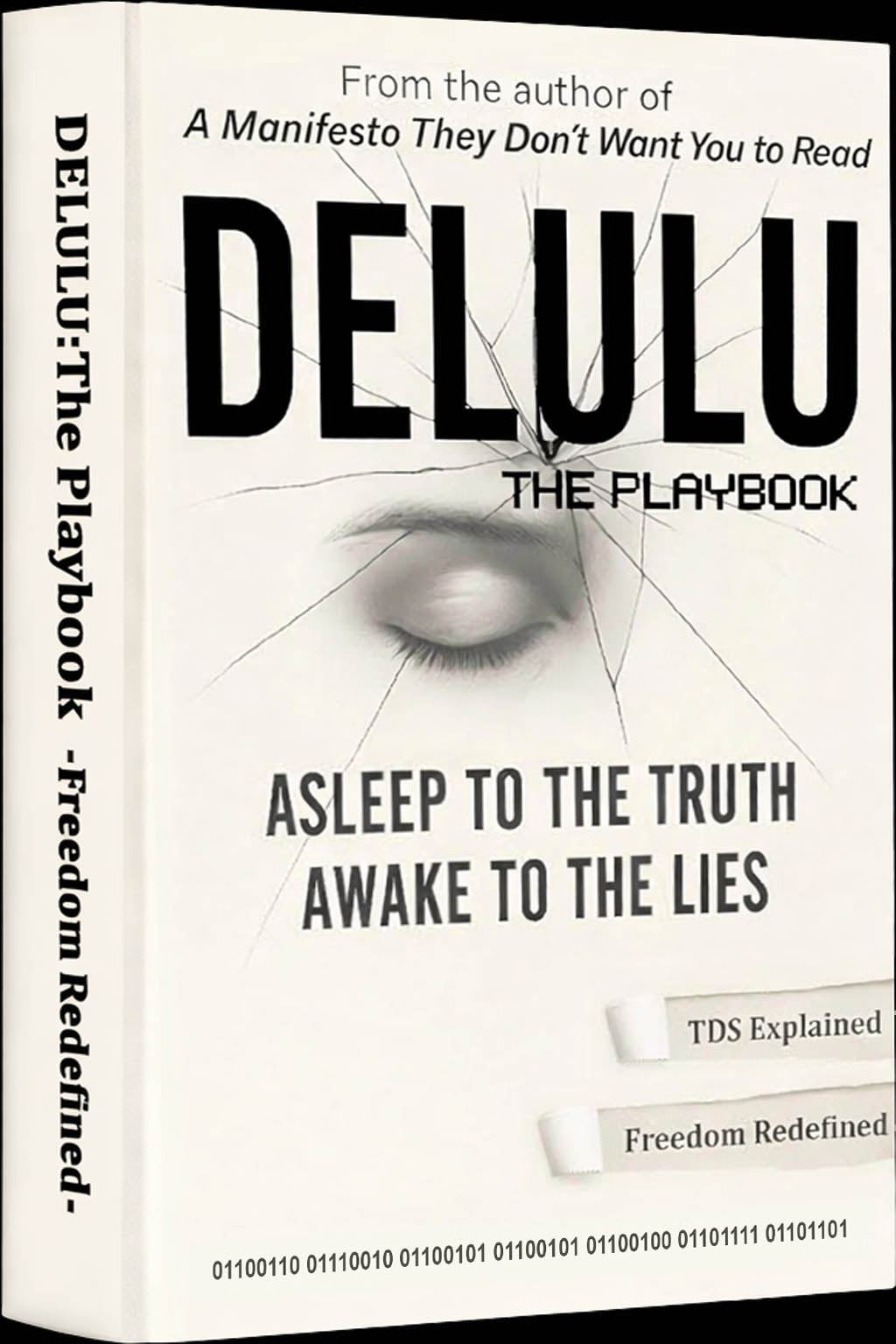
Reader’s Note
If you find this book difficult to read, confusing, or angering, pause. That reaction may be the first sign that your thoughts have been shaped by forces outside yourself. Facing the truth will be far more painful than living in the comfort of a lie.
Truth, when it arrives, does not knock softly. It strips away that peace and forces us to rebuild ourselves from what is left behind. After reading this book, you will understand why so many people choose to look away instead of facing it.
The discomfort is not proof that I am wrong. But it may be proof that the system has already shaped what you believe.
Samples from a few chapters can be found below.
In all honesty, do you believe you are fully in control of your thoughts?
Chapter 1: The Illusion of Existence
My name is Guy Dugas. I was born in Canada, tagged and identified as a white Acadian, yet the political system has drained those words of meaning and value, something I have felt more and more over the decades. According to those who govern, I can now easily be identified as broke and irrelevant, and rightly so.
Importantly, I was not born a nepo baby.
I was born into an era shaped not by freedom, but by a new form of political slavery engineered through policy, control, and manufactured inequality, an environment in which my own sense of societal value has steadily declined as identity becomes the primary lens through which people are judged.
Based on available ancestry information, I am likely a 14th- to 16th-generation descendant of the early Acadians who first settled in Nova Scotia and whose descendants later returned, eventually establishing new communities in Clare, Nova Scotia, after the Expulsion of 1755 to rebuild what had been lost.
After the Great Expulsion of the Acadians, they returned and rebuilt from the ground up. More than 275 years later, I now witness a government that treats its own citizens with a disregard not unlike that once used against my ancestors.

Image depicting Acadian families, my ancestors, being deported (1755). The methods have changed but the struggles remain.
Even though I was born more than 200 years after the expulsion, I instantly inherited the same invisible shackles of my ancestors the moment I arrived.
I was born in a system where the rules that determine what I can earn, own, say, save, or refuse were written long before I had any say in them, enforced without my consent, and changed in ways that consistently benefited institutions over individuals.
These constraints can be described as a form of slavery, though no one around me would have called it that. Yet, the pain remains. From 1755 to now, the methods of control have evolved, but the purpose has never changed.
One generation stands between freedom and extinction, yet freedom remains, much like the promises of politics, forever out of reach.
When I refer to a "white Acadian," it is not as a statement of superiority or prejudice, but as a comparison. Had I been born Indigenous or as a person of color, the chains would have looked different. Their struggles were, and still are, tied to a more visible layer of control, while mine are cloaked in comfort and illusion. My chains are disguised as privilege. The difference lies only in visibility, not in freedom. Because in the end, we are no longer simply segregated; we are also graded.
If almost everything that exists today can be worked out with mathematical precision, then perhaps what has been silently applied to us could be as well. The systems that shape our thoughts, guide our choices, and measure our worth all rely on equations that someone, somewhere, decided were fair. Yet no equation can capture the full weight of fear, dignity, or the quiet surrender of the human spirit.
Those who built these systems believe that everything can be calculated, but what they could never measure is the cost of a soul that forgets it was once free. My one hope before I die is to someday remove my chains and breathe freely while stepping out of the harvest.
Where are all the veterans in all of this? They were once told they fought for freedom, yet what they fought against was replaced by what can easily be described as a new form of slavery that feels quieter and subtler, built through hidden control, one so well hidden it no longer needs chains to rule. If everything is written in blood, then what did they truly bleed for?
Freedom's illusion had been purchased through pain and suffering, but was it truly delivered?
I personally know veterans who are furious with what our government has become.
These are men and women who once believed their sacrifices would matter. They believed they were defending something real.
Yet when they came home, they discovered that the country they bled for no longer hears them, no longer respects them, and no longer even pretends to value what they gave.
More than one veteran has told me that the wars they fought would mean nothing in the modern world. The enemy now does not wear a uniform. It hides inside institutions, inside paperwork, inside decisions that crush people without ever showing a face.
Abandoned by the very system they protected, many veterans now fight a quieter war, one for survival. Some cling to the few benefits still offered to them. Take the medical cannabis program as an example. Yes, some use it for healing, but others use it simply to stay alive. Reselling their allotment has now become a lifeline, not out of greed but out of desperation, a small and silent rebellion against a country that turned its back on them.
One veteran said something that has never left me. Freedom never came, and he was living with what could easily be described as a new form of PTSD. On the battlefield, you survived by dodging bullets. Here at home, the trauma comes from the government you once defended. It comes from being forgotten, from being treated as if your existence no longer holds value. During the conversation, teary-eyed, he uttered the words, "I feel like a foreigner in my own country. This is not what they died for."
Ironically, we both pretty much feel the same, yet he had fought for better.
The veterans are not alone. They gave everything they had and are now left trying to survive on the scraps of a nation that seems to have forgotten who stood on the front lines for it. Their sacrifices built the ground we walk on, yet they are left fighting to stand on it.
When I speak of slavery in this chapter, I mean it figuratively, as a way to describe modern forms of control. I am not referring to the brutality of chains and whips but to the quiet captivity of dependency and control.
True slavery does not always require physical restraint; it thrives wherever one's labor, time, and choices are directed by unseen authorities. It is ownership without compassion, control without chains, and obedience disguised as participation. What separates modern slavery from the past is not its cruelty but its subtlety.
We are conditioned to believe that if we are not physically confined or restrained, we are free, yet the mechanisms that govern our lives often operate with the same precision of bondage. Through debt regulation, taxation, and fear, the system keeps us bound. The terminology may differ, but the principle remains unchanged. The few rule the many by convincing them they are free.
Yet, the moment a person attempts to live outside the constructed idea of freedom, the true limits of that illusion are revealed.
Across Canadian provinces such as British Columbia, Alberta, Nova Scotia, Ontario, and Quebec, a quiet pattern has emerged. People who attempt to live independently of the system soon discover that autonomy is treated not only as a threat, but as a problem that needs to be corrected.
The right to disconnect, to provide for oneself, or to choose a life outside managed infrastructure has become something that must be justified, inspected, and approved.
Those who believed that freedom meant the ability to live on their own land, by their own means, are learning that the system does not let go easily.
In theory, living off-grid is not illegal. In practice, it is obstructed at every turn. Provinces require approved septic systems, inspected electrical connections, adherence to zoning rules, and formal occupancy permits.
These regulations are framed as matters of health and safety, yet they are enforced in ways that dismantle independence rather than support it. People are fined, threatened with eviction, or forced to reconnect to utilities they neither want nor need. The rules do not encourage self-sufficiency. They punish it.
A population that generates its own power, gathers its own water, grows its own food, and keeps its own records becomes one that cannot be tracked or shaped. It becomes a population that does not depend on systems for survival.
That kind of example is dangerous to the structure that governs us because it reveals a truth that was never meant to be visible. Freedom is still possible, and it requires no permission.
The more people attempt to step outside the system, the more aggressively the system responds. Not with public declarations, but through quiet enforcement, bureaucracy, inspection orders, zoning interpretations, and technical violations. The mechanisms of control are quiet. They arrive through envelopes, hearings, compliance notices, and administrative rulings. They hide behind the language of protection, yet what they protect most fiercely is their own authority.
Those who pursue independence are not celebrated. They are corrected, contained, and brought back into alignment. This alone exposes the uncomfortable reality.
Freedom is tolerated only when it poses no threat, because examples of real freedom cannot be allowed to spread.
A society that cannot harvest its people cannot control them, and control has become the currency upon which all modern systems are built.
See if you can find similarities to slavery throughout this chapter, and see how they pertain to your own existence.
What once existed only as a symbolic idea of slavery, "by word only," has evolved into new methods of influence and control, and is now hidden beneath the language of progress. Its chains are digital, its overseers bureaucratic, and its prisons invisible.
Today, the master's whip has quietly been replaced by the screen's glow. People willingly surrender their personal data, their movements, and their desires to systems they do not control, believing that participation equals freedom. It now feels as though the plantation has become global, not literally, but as a metaphor for widespread dependence, bound not by fences but by networks.
The modern person carries their chains in their pocket, through the devices they charge nightly while calling it convenience. When you search for the true definition of slavery, you will find many words that attempt to capture it, yet the meaning always depends on the perspective of the ones who define it. Some describe it as restriction, others as bondage through debt, the loss of liberty, or even dishonor through a taxed existence.
In truth, slavery extends beyond chains or ownership. It exists wherever control replaces choice and where fear, coercion, and deception become the tools that bind.
It is not only the taking of one's freedom, but the quiet conditioning that convinces a person they no longer deserve it.
Modern slavery is a system of exploitation that removes a person's freedoms through dependence and control. The current system of ownership is reinforced through invisible walls, carefully orchestrated and built without the consent of the controlled.
I often find myself envious of the Indigenous population. Their culture appears freer than the white man's; it is rooted in nature and spiritual balance. Note: if "freer" is the proper word to use in their situation, it is simply a word used as a mask for another form of control. As in reality, they are required to live within invisible boundaries confined by government systems and labeled through policies and bans. They are bound to reserves through design rather than choice.
Their system allows some movement, yet links their permissions, benefits, and identity to those defined territories. It is a quiet strategy of control that maintains connection without physical restraint.
Trusting the white man is what put Indigenous people on the reservation. Indigenous people are not called slaves, yet their freedom is always being managed. Their culture is filtered through bureaucracy. So, in essence, they are not free. Note: I am a white man, but I am not blind. “Respect”
By contrast, Black slavery was outlawed in 1834 through the Slavery Abolition Act, but the truth is that freedom never arrived. It simply changed form. Chains turned into contracts, and ownership became management.
People were declared free, yet they remained bound by laws, institutions, and hierarchies that never intended to let them stand as equals. So in essence they are not free people either.
My ancestors were deported in 1755. Those who survived and eventually returned believed they had reclaimed their land, but what they truly reclaimed was a more comfortable form of captivity. They became slaves once again, not through chains but through compliance, rebuilding what they thought was freedom while living inside a system that quietly decided what that word meant.
And that system, now perfected, no longer needs violence to maintain control. It uses comfort. It uses routine. The slave no longer dreams of escape because the cage feels familiar.
The cruelest trick of modern control is not oppression, but contentment. The illusion is that one's captivity is a chosen life.
The moment I arrived in this world, it was a celebration for my parents, who, like so many before them, had been born with chains too subtle to see. Still, it was a blessing, a moment of joy celebrating the great gift of life. Yet, the moment I took my first breath, I was recorded, and I was given a certificate number in the form of a birth certificate. That was when my official history began. I was now branded for life. My name was now secondary to my record. My birth was my branding; in that instant, I became just another number.
In my teens, the bondage tightened. I was assigned a Social Insurance Number, the so-called "SIN." It was presented as a key to adulthood and work, but it was really a ledger that tracked my value to the system. That number grew into digital identifiers and data trails that now define who I am. The brand evolved. The chain is no longer visible, but it is stronger than ever.
I feel it every time I log in, every time I pay a bill, and every time I obey a rule I never agreed to. From that moment I became a resource, an investment that never required my consent.
The way we are managed mirrors cattle, and perhaps this is no surprise since we have all been reduced to nothing more than numbers. As long as the system benefits from this arrangement, it will never change. With more enhanced digital identifiers now coming into play, your branding will only intensify. If you are lost, the one who finds you will already know who your owner is.
This feels like a kind of modern slavery, slavery disguised as progress, not literal enslavement, but a structured system that deepens dependence.
And just like livestock, the modern worker is tagged, tracked, and monitored not in the literal sense of physical restraint but by credentials. They are told it is for efficiency, for safety, and for convenience. Yet, every tag narrows the boundaries of their autonomy. The digital leash is light, but it never loosens. Each update, each verification, each new system of identification claims to serve, but it only binds tighter.
As the years went by, all these records were introduced with purpose. They were meant to track existence, to organize society, and to ensure fairness in systems of taxation and responsibility. It made sense in a world that was still trying to understand itself. But what began as record-keeping quietly became record-ownership.
The system no longer uses the information to serve the people; it uses it to measure and manage them. It feels as though we are owned by the very systems that shape our lives.
At first, the idea seemed reasonable. Identification was initially introduced to ensure contribution and accountability. It was presented simply as a way to keep track of earnings and benefits, but as time passed, the purpose shifted. Numbers stopped representing participation and began to define worth. Identity became property, and the individual became inventory.
What began as a promise of fairness has turned into a barcode of obedience. Every certificate, license, and registration is another chain disguised as order. The more sophisticated the record, the less freedom it protects.
The system has redefined evolution itself, measuring our worth by coordinates instead of consciousness. It no longer asks who we are, but where we are. We must remember that when people are managed rather than freed, it quickly begins to mirror the logic of slavery, and somehow along the way, we have mistaken management for mercy.
Existence is now mapped and categorized, every movement recorded as proof of life. The sacred measure of being has been replaced by the mechanical pulse of data, and humanity, blind in its comfort, calls this progress.
As you will find in greater detail throughout other chapters, the SIN will most likely be replaced by digital branding. Since hot branding is now considered cruel, the system has found its modern alternative.
Digital identifiers, retinal scans, and eventually, implanted chips will promise safety, but they serve the same purpose as the mark once burned into flesh. What once stood for record-keeping now stands for stronger regulations; the difference is not in the method but in the intent. It no longer identifies you for service. It identifies you for control.
This is the quiet evolution of captivity. Once the mark was burned by fire, now it is written in code. Once, it scarred the skin. Now it defines the self.
What is unfolding today is not progress; it is precision. Every new technology, every convenience, is a step closer to full dependency on systems that do not recognize you as human but simply as data.
Each layer of automation tightens the leash around human freedom. You are not being asked to participate. You are being trained to comply.
The tragedy is that most people believe they are still choosing. But there can be no choice when refusal leads to exclusion, and no consent when silence is treated as agreement. The coming system does not need your approval; it only needs your participation, and participation at this stage is complicity.
We are now witnessing the quiet erosion of everything once promised in the name of freedom. It is not a collapse born of force but of convenience. It happens in the click of a button, in the casual acceptance of new terms, in the belief that technology will protect us. The truth is simple: what we are accepting today will define the boundaries of our freedoms tomorrow.
Once total control is established, there will be no opting out, as the leash will finally tighten. It feels as though we are moving toward being totally owned by the systems we rely on, for now, only metaphorically, not yet literally, yet being the questionable word!
As the years went by, I was told that freedom was my birthright. That I could buy land, build a home, and call it mine. I believed it because everyone around me did.
I worked, I saved, and I paid, but ownership proved to be nothing more than a temporary permission slip. I could buy land, but I could never truly own it. I could pay off a mortgage, but I could never claim full possession. There would always be another tax, another fee, another signature required to keep what I had already earned. Little did I know that I would end up being harvested forever.
I believe repetition is warranted here, because what follows is easy to ignore, but difficult to refute once examined. The term "homeownership" in Canada is in many ways a structured illusion. It is ownership in name but conditional in practice, as the state retains the ability to reclaim property if obligations are not met.
This is not presented as commentary, but as a perspective grounded in how the system operates. Those who disagree are encouraged to examine the structure themselves.
If I stopped paying, the land I had bought would no longer be mine. If I challenged the law, I would lose. The illusion of ownership was the leash, and I had worn it proudly, mistaking it for freedom.
Then came the moment that changed everything
I clearly remember the day I made the final payment on my property. I walked into the bank with pride, holding that last check as if it were a key to freedom. The teller smiled and congratulated me. "You now own your home," she said. And for a brief moment, I believed her.
Weeks later, the next property tax bill arrived, reminding me that failure to pay could result in the seizure of my home and my land. My name was on the deed, and yet it meant nothing. I had traded decades of labor for the privilege of renting what I thought I had bought.
Ownership was the bait that kept me chasing security that never existed. In reality, I had simply secured a front-row seat to my own exploitation. This was the proof that we are all being played.
It was then that I began to see the deeper truth: I could mow the grass on my property, but what lay beneath it was not mine. The soil, the minerals, the water below, even the air beneath my feet belonged to someone else.
Laws I had never read declared that my land was simply rented from the system, no matter how much I had paid. In many ways, I felt as though we are all nothing more than squatters on property we were endlessly charged to occupy, even when we believed we owned it.
If I dug a well, the water was not mine. I could legally drink it because I had paid for the permit, but the moment I sold a single liter to a neighbor to sustain life during a drought, I owed a tax to the same regime that claimed to defend my rights.
To share that water, I would need to register a business and install a flow meter so I could be billed per liter. If I refused, I could be fined or forbidden from using it at all. I paid but did not own. We are not homeowners, and we never were; we are simply tenants of the state.
The illusion is real. Freedom without ownership is theater. It is a carefully staged illusion. In truth, I had only purchased the illusion of freedom. Slaves are not forbidden from holding possessions, only from owning them.
All of this was only one piece of a much larger truth about ownership, a truth reached far beyond mortgages or payments.
It was then that I began to question everything I once accepted as truth. We have learned to be steadfast in our beliefs, yet flexible enough to accept that others may hold beliefs superior to our own. That realization shattered the foundation of what I had been taught. I began to see that belief itself had also been weaponized, that conviction without understanding had made me loyal to my own chains.
The system did not need to use force to control me. It only needed to shape what I believed. I was raised to defend the structure that confined me. I believed in authority because I was told it protected me. I believed in taxation because I was told it sustained civilization. I believed in ownership because I was told it defined success. Each belief served the system, not me.
Every slogan, every rule, and every tradition was designed to keep me compliant, convincing me that I was free. That is the cruelest design of all: a prison without walls whose inmates protect it themselves. When belief becomes obedience, control no longer needs to hide.
If I am a good slave, I may be granted a taste of freedom, a kind that must be earned through obedience. I might travel abroad if I have the right papers, the proper approval, and the identification proving I am still in good standing. My freedom is not mine; it never was; it was always conditional. The moment I step outside compliance, the appearance of freedom vanishes.
This is how the illusion is maintained. By comparison, in the United States, people are born with rights defined under the Bill of Rights. That document prevents the legislature from overriding certain fundamental freedoms.
By contrast, the Canadian Charter of Rights and Freedoms includes a "notwithstanding clause," which allows governments to temporarily suspend or limit rights under specific circumstances.
Because of this, the privileges that Canadians are bound to are constantly subject to legal interpretation. The density of these invisible chains changes over time, but they never fade away.
Privileges are not rights; our rights are offered in such a way that gratitude is expected in return. You thank them for what should have been yours by birth. The cage becomes comfortable when its bars are padded with convenience.
Liberty has simply become a performance. It gives the appearance of choice while keeping the leash just long enough to move within the cage.
When I travel, it is not as a free man, but as a registered product moving through monitored zones. My movements are recorded, my finances are tracked, and my behavior is assessed. Privilege is not freedom; it is permission to pretend I am free.
People around me either see this as normal or are simply blind to the reality of their own existence. They smile when they receive their approvals, unaware that every stamp of permission is another link in their chain.
They call this safety and progress, but what they truly fear is what happens when the permission is revoked.
I began to see the pattern. The system owns everything because it owns us. The same authority that dictates what is under the soil dictates what is inside our wallets, our homes, and our minds. It mines our labor, our attention, and our obedience. We are harvested in ways our ancestors could never have imagined.
Slavery still exists, only now it is hidden in the noise
I admire those who have found ways to bypass the harvest, the few who understand that true freedom requires invisibility. They have mastered the art of slipping between the cracks, hiding what little they own from prying eyes. I am envious, yet they are criminalized, and examples are made of them to frighten others into compliance. I do not condone breaking the law, yet I understand the desperation that drives people to seek shelter from a system that feeds on their effort. Simply voicing my opinion on this truth will be seen as promoting criminal behavior, as anything that is seen as competition with the system is never tolerated.
Some of the tactics that people are now forced to use just to survive are sad to witness. With the wealth pouring out of this country and the stripping of dignity it inflicts on its people, the injustice has become too visible to ignore. What once looked like progress now feels like punishment. The harder people work, the tighter the grip becomes, and yet those who resist are painted as criminals rather than casualties. When casualties are painted as criminals, the system is severely broken.
The chaos we see in the streets today comes from those who could not escape the grid. They are the visible casualties of a system that punishes independence and rewards submission. The struggle you witness is not born of laziness or moral decay but of suffocation, a society drained by design until survival itself becomes rebellion.
The slavery of today is not built on chains of iron but on paper and code. It is woven so tightly into life that most people cannot see it. They call it progress and convenience. I call it silent servitude refined to perfection.
There is another truth the system quietly understands. Fewer babies are now being born, and fewer records are being created to enter the harvest.
To keep the machinery supplied with workers and payers, policy turns to volume. New arrivals replace missing numbers. Immigration is framed as compassion and growth, and for many it is a chance at stability. Yet, the system counts differently; it counts taxable hours, fees, and compliance.
We were told that Canada's strength was its diversity, that we were part of a great immigration melting pot. But the truth is that the pot does not blend; it sorts. It grades, measures, and categorizes under the illusion of equality while ensuring that no one ever truly melts into freedom.
What the public is never told is that this illusion comes at a price, a price that is paid by those already struggling to survive, while hundreds of billions are funneled into immigration programs and foreign aid, Canadian citizens sink deeper into debt. Families sell their homes, not out of ambition but desperation. Credit cards are maxed, mortgages reversed, and the future of the next generation is mortgaged to keep the present from collapsing.
The melting pot feeds from the same table it starves, redistributing not wealth but survival itself.
Each new entrant feeds the apparatus that extracts people's money and time. When human beings are reduced to inputs on a ledger, every new slave, as the system would see it, simply lowers the value of the last. I reject that arithmetic. A person is not a unit, a soul is not a statistic, but the machine speaks only in numbers.
Beyond the Human Threshold
Morality has long passed us by. As the public now grows increasingly frustrated with the flood of immigration, the system will eventually look for another way to maintain its numbers. As control returns fully into its hands, I firmly believe that it will not hesitate to manufacture its next generation of workers. Fabricated babies, genetically engineered people, or, as I prefer to call them, "designed humans," will eventually, and undoubtedly, come into play.
More hands must always be born into the harvest, and if the natural humans no longer arrive fast enough, the system will simply build them, thus further eroding the value of real humans, if that is still what we can call ourselves.
If you believe this is not even possible or that it isn't already being developed behind closed doors, then you haven't been paying attention.
The runaway machine that was once seen as governance has become the new altar and convenience its god. We kneel before devices that hear our whispers and track our desires, and now they have the power to predict our sins. Faith has not disappeared; it has been repackaged and monetized. The prayer is no longer spoken; it is typed, searched, and stored.
Every generation inherits not just the land, but the consequences of ownership and silence.
The world that your children will walk through is now being written in boardrooms, in algorithms, and in the quiet compliance of the many. If we do nothing, they will inherit only our excuses, not our courage.
Living day to day is not living; it is surviving. Every moment feels like a transaction, every right conditional, every freedom leased. The system does not need to imprison bodies when it can imprison minds. It does not need to whip slaves when it can convince them that their chains are symbols of pride.
The truth is simple yet unbearable to many. I was born into slavery, raised to serve it, and conditioned to defend it. But now I see it for what it is. The system does not want free people; it wants compliant workers, predictable consumers, and quiet taxpayers. It wants the illusion of choice so that rebellion feels unnecessary.
Yet eventually, over time, something in me began to stir, a quiet defiance that no system could ever extinguish.
Awareness has a cost, but it also brings power. Once I saw the machinery, I could no longer serve it blindly. I stopped apologizing for questioning the world that claimed to protect me. I stopped believing that compliance was a virtue. I also began to reclaim ownership of the only thing that was ever truly mine, my mind.
At first, that defiance was only a whisper. It did not roar or shout; it simply existed as a thought that refused to die. Each time I questioned authority, the walls of illusion weakened. Each time I refused to accept fear as truth, the chains grew lighter. I began to understand that real freedom is not permission granted by others; it is a choice made within.
Freedom, I realized, is reclaimed piece by piece, thought by thought. The chains that bind the body are weak compared to those that bind the mind, but once you begin to see them, they lose their strength.
The hardest fact of reality is that slavery still exists, but so does the possibility of awakening. And once a mind awakens, it cannot be enslaved again.
Freedom is not the absence of control; it is the presence of understanding. It is the courage to see the system without fear and still choose to think freely.
It begins quietly inside the mind that decides not to kneel. And once that decision is made, there is no turning back.
People are now openly conversing and realizing that they are living in a kind of captivity they never consented to. Some are starting to feel the walls that have been built around them, though few can remember when the first brick was laid.
It did not happen overnight; it happened in silence, somewhat like an iceberg slowly drifting in, creeping forward ever so silently yet doing an enormous amount of damage on the way to its predetermined destination. It happened through the small agreements we signed and the permissions we granted for convenience.
The cages were there long before they became digital, long before they ever became visible.
Now as awareness spreads, the question is no longer whether we are confined but what civilization will look like when the fences are finally seen for what they are. Will humanity adapt to life inside them, or will it remember what it feels like to be free? If you look at the news around the world, it's clear that the cracks are beginning to show.
The architects of this design failed to realize the truth, which is that everything has an expiry date! Human beings, the most intelligent of all living creatures, were never meant to be fenced in, tagged, branded, or managed like farm animals. Yet through policy and technology, the system has achieved what no tyrant ever could: the quiet domestication of the human spirit.
It is my belief that the big crash is imminent if nothing is changed in the very near future, as the cracks are showing; the telltale signs are that the chains are getting stronger than ever.
Important to note: even the strongest dams have weak points, and once the pressure exceeds what can be contained, failure becomes inevitable. Cracks spread, walls give way, and what was once held together by force begins to collapse. Those who were once asleep now appear to be awakening, though perhaps too late.
Once the dam collapses, this is what our demise may look like: there will be two classes of people in the end, the billionaires and the trillionaires who will be living in harmony as one within their carefully chosen enclaves of privilege, and the rest, from the millionaires down to the poor, living as one people struggling to survive on the remnants of what once was.
The lower class will be left to feed on the leftovers, which may or may not be offered, while the poor are left to burn themselves into oblivion as the architects of this collapse watch from their fortified paradise, untouched and unrepentant.
Chapter 2: Narrative is Everything
In our world, the story matters far more than the raw facts. Narrative shapes perception, frames morality, and dictates action. A story repeated enough times and loudly enough eventually becomes truth not because it is inherently true, but because it dominates consciousness.
Consider how governments and corporations operate; they do not always need to suppress facts directly because they simply bury them in noise. Political decisions are rarely made in isolation; they are shaped by the financial interests of shareholders whose reach extends far beyond the boardroom.
When policy collides with profit, profit wins. The illusion of representation is preserved through debate and ceremony, but the outcome is predetermined. Citizens are left to choose between options written by those who already own the result.
An inconvenient truth can be rendered invisible if the story surrounding it is compelling enough. Facts, context, and evidence can exist in abundance, yet a narrative repeated across media, reinforced by peers, and amplified through social channels can become reality for the masses.
Dissent is rarely eliminated with violence in modern society. Instead, it is relabeled, reframed, and socially penalized. Those who question the dominant narrative are called extremists, conspiracy theorists, or troublemakers. Words themselves are reshaped so that even asking a question may place you outside the circle of accepted thought.
Take the media coverage of major political scandals as an example. In the early 2000s, the financial crisis was analyzed by a combination of journalists, economists, and policymakers. Yet, the narrative that dominated public perception often downplayed the systemic risks and focused instead on individual blame or convenient simplifications.
Millions accepted the storyline as truth, even when detailed analysis revealed deeper causes hidden behind the curtain.
Social media compounds this effect. Algorithms do not simply show content; they curate experiences to maximize engagement. Outrage, confirmation bias, and ongoing repetition are rewarded, while nuanced discussion is penalized.
Many believe they are encountering independent thoughts or viewpoints, yet these curated experiences often reinforce the same pre-packaged narratives.
The Delulu Era is revealed most clearly in how people react to political figures. Take, for example, the widespread public debates about Donald Trump: for some, he represents chaos, incompetence, or danger. For others, he represents strength, clarity, and unfiltered honesty.
Both impressions are filtered through narratives designed by media interest groups and reinforced through feedback loops. It is not that people cannot think for themselves; it is that their ability to do so is constrained by the relentless repetition of controlled narratives. Many sources are engaged in a pattern of strategic defamation against President Trump.
Even small social interactions illustrate the power of narrative. I have experienced countless conversations where a single mention of a political figure or controversial topic immediately triggers a predictable emotional response. Friends, colleagues, and strangers alike react in ways that reveal that their beliefs are not fully self-formed but are programmed by exposure to repetitive messaging.
What strikes me most is not the name itself, but the certainty behind it. There is a kind of confidence born not from knowledge, but from repetition. When a belief is never examined, doubt never enters the room. The reaction becomes instinctive.
Many people are deeply uncomfortable with complexity. It is easier to reduce the world to labels than to wrestle with nuance. Volume replaces reasoning, and certainty replaces curiosity. The loudest voice is seldom the most reflective.
The frustration lies not with the individuals themselves but with the structural forces that shaped their thinking.
The fog of corruption has become extremely efficient at blinding the public to the truth, leaving many unable to recognize the paid and strategic defamation campaigns directed at Donald Trump.
The consequences of this conditioning extend far beyond opinion. When the mind is trained or programmed from a young age to distrust its judgment, the person grows into an adult who fears disagreement, avoids conflict, and seeks approval before forming a belief. Confidence collapses into dependence, and resilience gives way to emotional fragility. People begin to treat their own thoughts as dangerous, as if thinking for themselves carries a risk they are not equipped to manage.
A generation shaped this way cannot challenge authority because the system has conditioned them to believe that compliance is the safest path. This outcome is not accidental; it is the result of years of subtle programming designed to weaken the individual long before they ever face the world as an adult. And if this description feels uncomfortably familiar, it may be because you have been exposed to this conditioning more than you realize.
Baby Boomers were raised under a different kind of influence. Their world was shaped by what was then called legacy media, now more critically viewed by many as the "PTN" (Political Theater Network), where television and radio functioned as the primary sources of information. Even if those platforms were imperfect, people could still sense when something felt true, or at least believed they could.
At the time, the flow of information was very limited, which made it easier to compare what was reported with what they experienced in their daily lives.
Local gossip always plays its part, as it always has, as those with the least understanding often believe themselves the most qualified to explain the world, "the Dunning-Kruger effect."
Silence is a discipline not everyone learns. But even with those shortcomings, their reality was not drowned in overwhelming noise.
Gen Z and Millennials, on the other hand, were raised in something entirely different; they grew up in a soup of endless information, an overwhelming flow of content that one can never fully navigate.
When every voice claims authority, certainty becomes a lifeline. So, they cling to the narratives that feel familiar, not because those narratives are true, but because they offer emotional comfort. Facts that challenge their identity are instantly dismissed, while stories that affirm their worldview are embraced.
Confirmation bias leads people to seek out information that supports what they already believe, while ignoring evidence that contradicts them.
This is not stubbornness; it is the predictable result of being raised inside a maze of contradictions, where clarity is rare and confusion is constant.
History provides countless examples of narrative control. During World War I, crazy propaganda posters filled with exaggerated imagery in the United States and Europe shaped public perception of the enemy, patriotism, and civic duty. Facts about the complexities of war were secondary to the narrative of heroism, moral clarity, and national identity.
Similarly, during the Cold War, both sides used controlled media to present a simplified version of reality, portraying the opposition as inherently evil and morally inferior. These narratives shaped public opinion to the point that questioning them was socially or politically dangerous.
In the modern context, technological tools have the capability to magnify the speed and the precision of narrative control. AI-driven recommendation systems, targeted advertising, and real-time analytics allow for the identification of susceptible individuals and the crafting of content tailored to reinforce existing beliefs. The result is a society in which perception can be engineered at an unprecedented scale.
It is not only governments and corporations that shape narratives. Cultural institutions, in addition to academic research, and entertainment also conveniently participate. Education, art, and storytelling quickly reinforce assumptions so deeply that they become invisible. People may believe they have arrived at their opinions independently, yet those opinions are often shaped and guided by external sources, such as legacy media propaganda platforms and even monetized by external forces.
I often wonder what level of blind faith or confidence a person must have to still believe the narratives fed by the "PTN" legacy media, or the government.
Consider the way history textbooks present events. The facts themselves are rarely false, but the selection, emphasis, and omission create a story that serves specific purposes.
Students are taught lessons about morality, leadership, and national identity, often without being aware of the editorial decisions behind the presentation. They leave the classroom believing they have independently analyzed history, when in reality they have been guided by a carefully constructed narrative.
Never forget: the winners write the history
In the Delulu Era, the system is systematically structured to include the subtle personal application of narrative control. Conversations within social media and even casual workplace interactions are imbued with implied rules about acceptable thought and expression.
The enforcement of narrative orthodoxy does not always rely on authority; it relies on social consequences. Individuals quickly learn what may be said, how it may be said, and to whom, in order to avoid ridicule, ostracism, or quiet punishment. It all depends on who you are talking to.
It is in this context that the modern individual exists, aware yet often unaware of all the invisible forces shaping perception.
The challenge of independent thought is magnified by the sheer volume of information and the speed at which narratives can spread. Questioning the story is increasingly risky, not in a legal sense necessarily but in social, professional, and psychological terms.
Even historical revisionism is part of this ecosystem. Governments and institutions may slowly reshape collective memory, emphasizing certain aspects while diminishing others.
The past is not erased outright; it is rewritten, and the new version is repeated until the original fades. Citizens are trained to accept this curated reality, often without realizing that they are consuming a selective history.
As seen in Orwell's novel 1984, the regime invented a new language called "Newspeak." This is the origin of doublespeak.
Doublespeak is now used to describe any modern use of deceptive bureaucratic or euphemistic language, especially by governments, corporations, and media.
Important to Note
George Orwell's book has been widely regarded as a timeless warning about totalitarianism, surveillance, and the manipulation of truth.
In the Delulu Era, many of the ideas Orwell described no longer feel like fiction; they feel increasingly familiar.
Examples of Doublespeak include
"Collateral damage" instead of "civilian deaths"
"Economic adjustment" instead of "mass layoffs"
"Surveillance for safety" instead of "mass spying"
"Temporary measures" instead of "permanent expansion"
"Content moderation" instead of "censorship"
"Hate speech" instead of "subjective interpretation"
"Virtue signaling" instead of "moral leadership"
"Digital identity" instead of "trackable existence"
"Protecting democracy" instead of "controlling dissent"
"Misinformation" instead of "unapproved opinion"
Chapter 5: Lawfare Fear and Financial Punishment
Control does not always rely on force. In modern societies, power often operates through subtler mechanisms such as legal systems, financial control, and bureaucratic pressure. These tools instill fear, enforce compliance, and silence dissent without a single weapon being drawn.
Fear has always been the most reliable tool of compliance. Once people are convinced that their safety depends on obedience, they stop asking whether the rules are just. We saw entire societies reshaped under the banner of health and protection.
Whether one agreed with the measures or not, what became clear was how quickly freedoms could be suspended once health was declared at risk. This demonstrates that public health policy can serve as both a political weapon and a medical service.
Lawfare, "the weaponization of law," is not about justice but about punishment. Regulations and legal procedures are applied not for justice, but to punish those who challenge authority. Activists, whistleblowers, and ordinary citizens may be buried in lawsuits, fines, and even imprisoned, enduring endless bureaucratic harassment strategically applied as a deterrent to others.
By-laws are yet another tool to force submission, as their purpose is not fairness but obedience. When by-laws are put into place, the real reason for the by-law seldom comes to light.
Canada's use of the Emergencies Act during the 2022 protests revealed how financial tools can be turned against citizens. Ordinary people saw their accounts frozen, businesses threatened, and reputations harmed, leaving the impression that dissent itself carried a financial cost.
This is the kind of situation many would expect only in less than stable democratic systems.
A federal court ruling stated that the use of the Emergencies Act was unlawful. Undoubtedly this ruling will be challenged as total control must be attained.
My own experience reflects this reality of total control. I was de-banked and have had insurance canceled for my business and my house on multiple occasions. When you have mortgages and business loans, things like this should not happen.
These tactics have created financial stress and lasting emotional damage. My wife and I, now over 65, still feel the effects of those pressures.
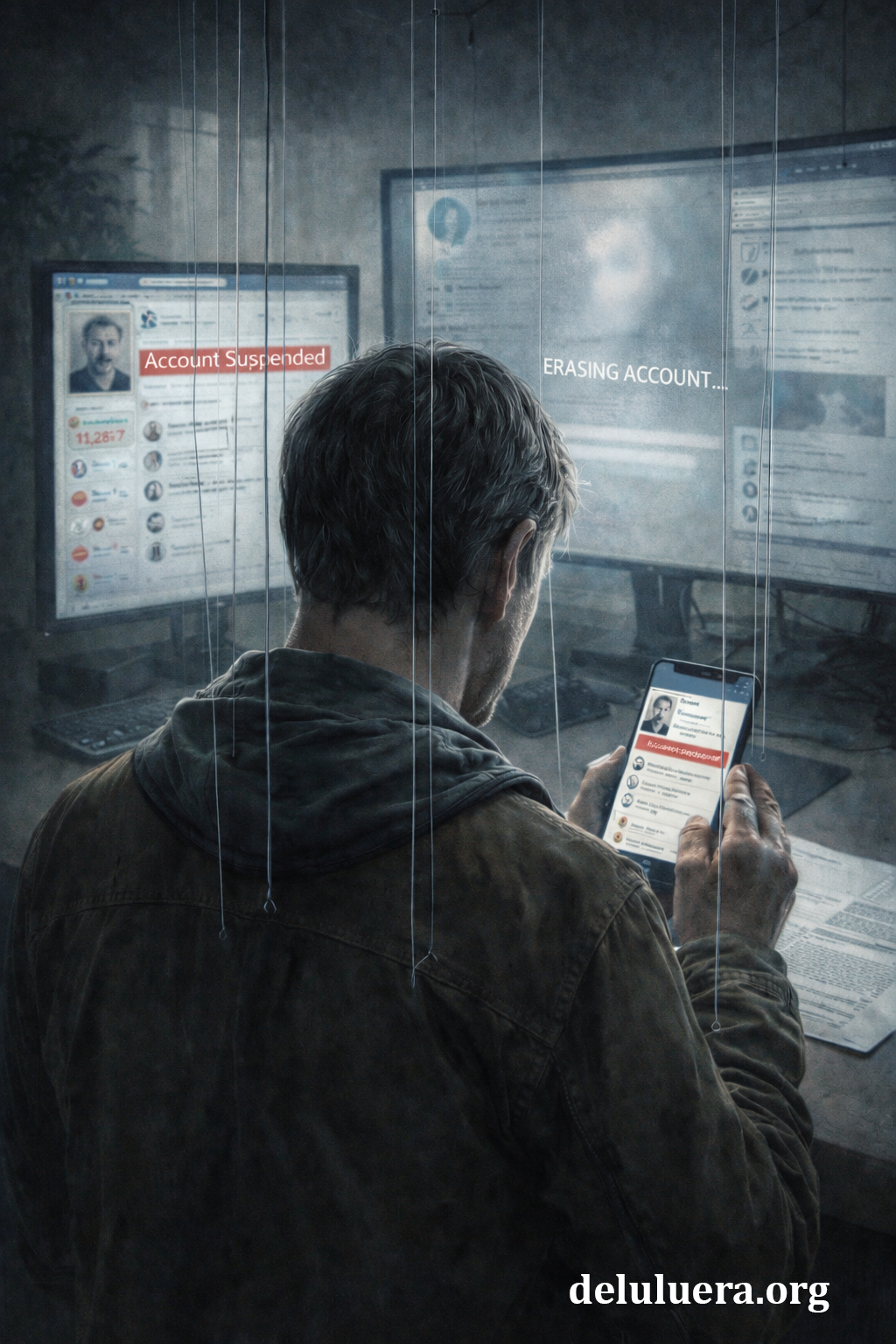
Lawfare and financial punishment have now become normalized.
I have felt that pain firsthand.
This is not theoretical.
Chapter 6: The Machinery of Consent
The world has always been governed by stories. Nations rise and fall, wars are fought, and policies are enforced not by quiet reason but by carefully constructed narratives. These stories are not simply told; they are manufactured, refined, and broadcast until they become indistinguishable from reality. Most people believe they are free thinkers, but in truth their perspectives have been shaped long before they ever began to question.
From Gesture to Belief to Programming
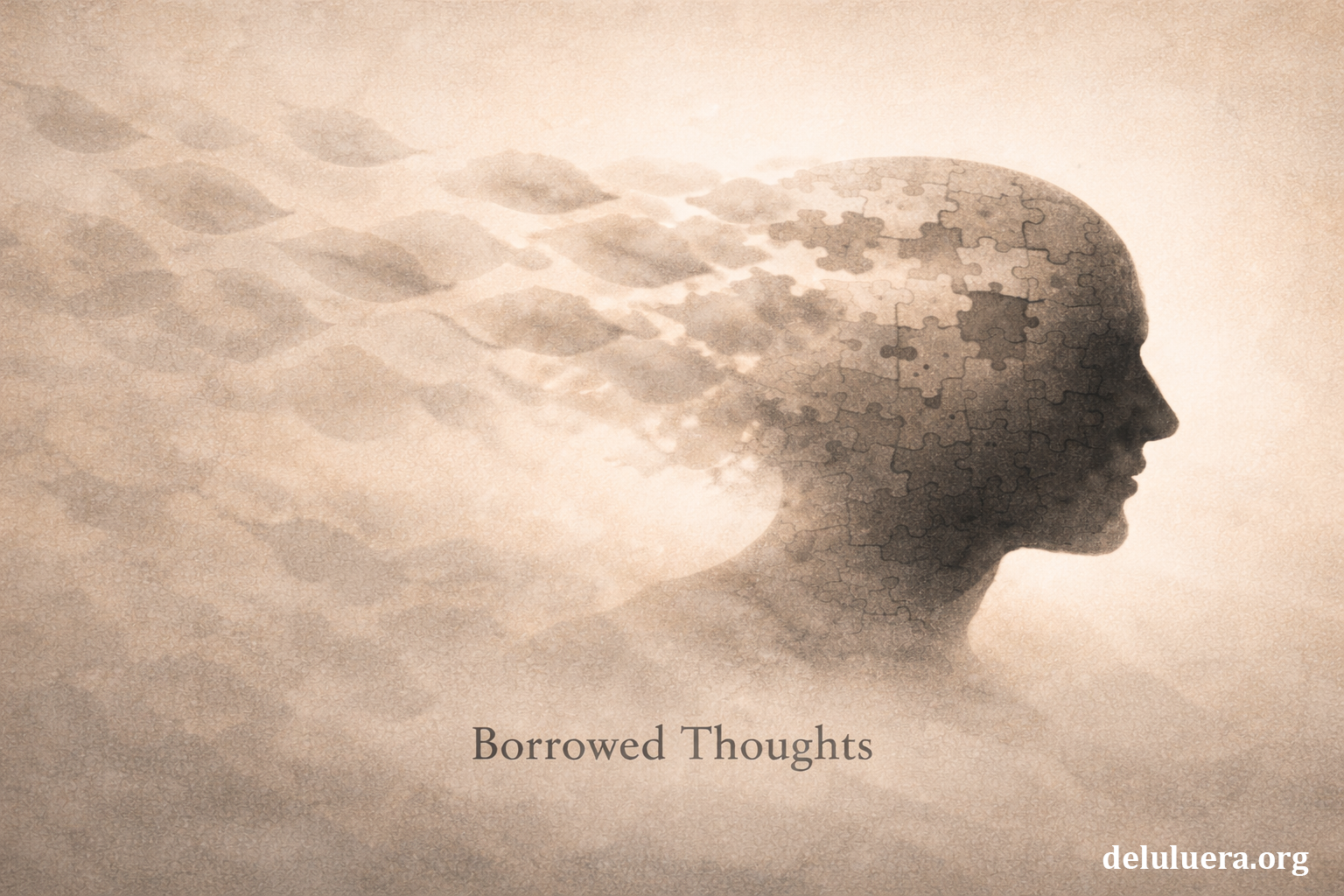
The mind rarely notices the moment it begins to follow. It simply assumes the thought was always its own.
Every one of us inherits ideas we never chose, yet we carry them as though we authored them ourselves; we reinforce them with opinion until they appear original, and then defend them as if they originated from within.
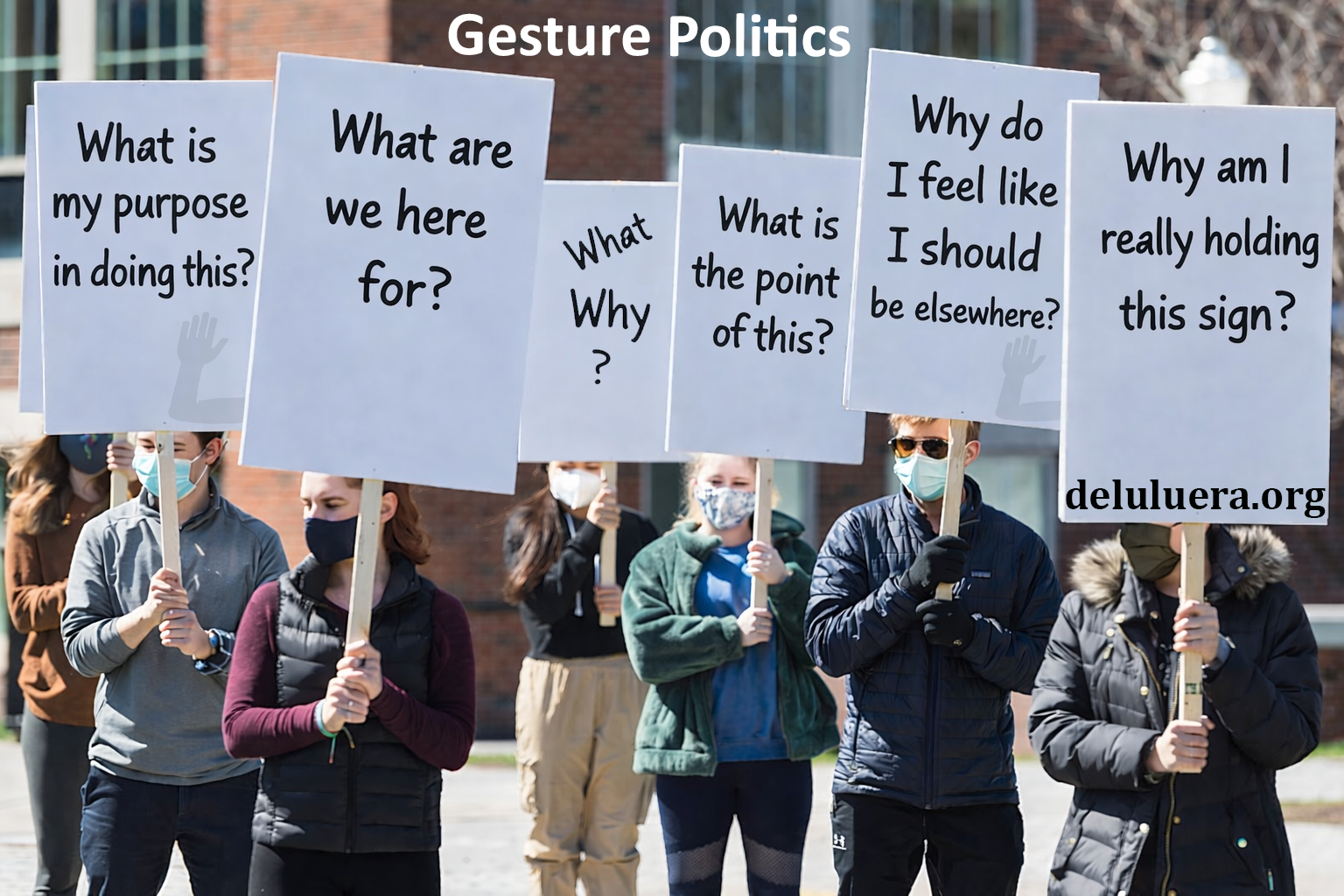
Control did not begin with language. It began when one human could bend another into imitation. Long before the first written word, and long before symbols were painted on cave walls, there was a moment when one person copied the action of another. A gesture was made, understood, and repeated, and in that instant thought became transferable and influenceable.
The mind was no longer an isolated realm. It could be shaped from the outside. Gesture became mimicry, mimicry became obedience, and obedience became the foundation for every system that would later claim the human mind as its property. This was the earliest seed of mental programming, the moment when behavior could be directed not by instinct, but by imitation.
From that simple act of copying came suggestion, belief, persuasion, authority, and eventually obedience. The first form of control was not written. It was mirrored.
Gesture became mimicry, mimicry became obedience, and you became property.
Chapter 20: Canada in a Nutshell
The Hybrid State: When Control Comes from Every Direction
Most people still cling to the idea that communism and fascism sit on opposite ends of some political spectrum. They imagine a line, left to right, as if freedom simply depends on choosing the correct point along it. That illusion has allowed governments to disguise something far more concerning. The truth is that both ideologies are built on the same foundation of control, and a modern government can borrow from each of them without ever admitting it.
The people watch food prices climb, housing becomes unattainable, and energy bills devour what little income remains. Meanwhile, the architects of these policies keep growing wealthier, protected by the very structures that are crushing the citizens.

When control comes from every direction, ordinary citizens bear the pain.
Chapter 21: The Zombie Age
Everyone thinks they are awake. They move through life certain their thoughts belong to them. But illusion is deepest when confidence is strongest.
Most people live this way, convinced they are conscious, aware, and in control. Yet when I look at the world, I see something far darker. I see a humanity that walks, talks, argues, and fights without ever stopping to ask whether the thoughts driving them were truly their own.
Asleep to the truth, convinced they are awake.
Observation alters behavior, and the Hawthorne effect hastens societal destabilization.
Chapter 22: The Cost of Being CanadianSilence in the End
There comes a point in every society when the truth is not hidden by accident; it is hidden because it no longer serves those in power to let you see it. When it comes to food, that point passed a long time ago.
Over the last few decades, the largest transformation of Canada’s food supply did not happen with announcements, debates, or public consultations. It happened quietly. It happened in silence. And it happened under the watch of leaders who claim to protect you. What appeared on store shelves changed, but the rules that allowed those changes were kept out of sight, tucked behind committees and regulatory jargon that the average Canadian was never supposed to notice.
What people do not realize is that many nations across the world have chosen a different path. Entire countries in Europe have stood firm against engineered foods, genetic manipulation, and synthetic proteins. They restrict them or ban them entirely. These governments decided that their citizens mattered more than corporate pressure. They acted as guardians.
Many countries have built layers of protection around their citizens, protections that Canada simply does not appear to mirror. In the United States, for example, the Department of Health and Human Services was created to safeguard public wellbeing through oversight and accountability.
In Europe, agencies enforce strict food safety rules, mandatory labeling, and precautionary bans on engineered products until long-term effects are understood. Even nations with fewer resources than Canada have taken stronger steps to shield their people from corporate influence and undisclosed risks. These governments protect their citizens. Canada opens the gates. It seems like Canada lost the coin toss, and we are simply left to fatten up a portfolio.
Here, engineered foods enter the market without clear labels. Gene-edited ingredients slide in without public discussion. Synthetic proteins created in tanks are mixed into products as if they were harmless. Even genetically altered fish can be sold to families who have no idea what they are buying. The silence is deliberate, and the silence is profitable.
It often feels as though every other nation took a step back and allowed Canada to become the proving ground, the site where the consequences would unfold in real time. It creates a sickening thought, as though we are sometimes being treated as expendable, as if our population exists to absorb the risks, so.....
Consent: Agreement Without...... Understanding
Several of my friends have........
Something you might consider looking into in order to protect yourself against consent by deception. View these downloadable forms found HERE.

Once signed, interpretation belongs elsewhere.
(Ambiguity is not protection)
Chapter 23: TDS Explained
The phrase "TDS" sparks every reaction imaginable. Some laugh at it, treating it as a joke, while others wield it like a weapon to defend their worldview. Still others despise it, dismissing it as propaganda invented by the other side. Yet very few attempt to try and understand it, and even fewer take the time to ask what it really means.
That too is Part of the Story
A label is created, repeated, ridiculed, and reinforced until it no longer merely describes reality but begins to shape it. Once that happens, people stop examining the thing itself and begin reacting to the label attached to it.
And so the Question Remains: what is TDS?
I did not arrive at my conclusions overnight. I spent a considerable amount of time researching the subject, trying to understand what TDS really is and why it generates such intense reactions. What I found was deeply unsettling.
Nearly every explanation I came across appeared to carry the same fingerprints. Different authors. Different websites. Different political leanings. Yet the patterns kept repeating. The more I looked, the harder they became to ignore.
It was as if many of the explanations had been drawn from the same source material. Rather than simply describing the phenomenon, they often appeared to be shaping the reader's understanding of it before any independent conclusion could be reached.
This is one reason the topic remains so heavily contested, and why this chapter will likely remain controversial for a long time to come. But again, these are my observations. These are my conclusions. These are my words, not words offered to me without consent.
TDS: What It Reveals
The question is not who has TDS, but who benefits from keeping it alive.
Watching the news today often feels less like following events and more like watching a script unfold. The same themes reappear. The same assumptions resurface. The same narratives are reinforced until repetition itself begins to masquerade as truth.
Even those who rarely consume the broadcasts often seem to carry the narratives with them. TDS is less a.....
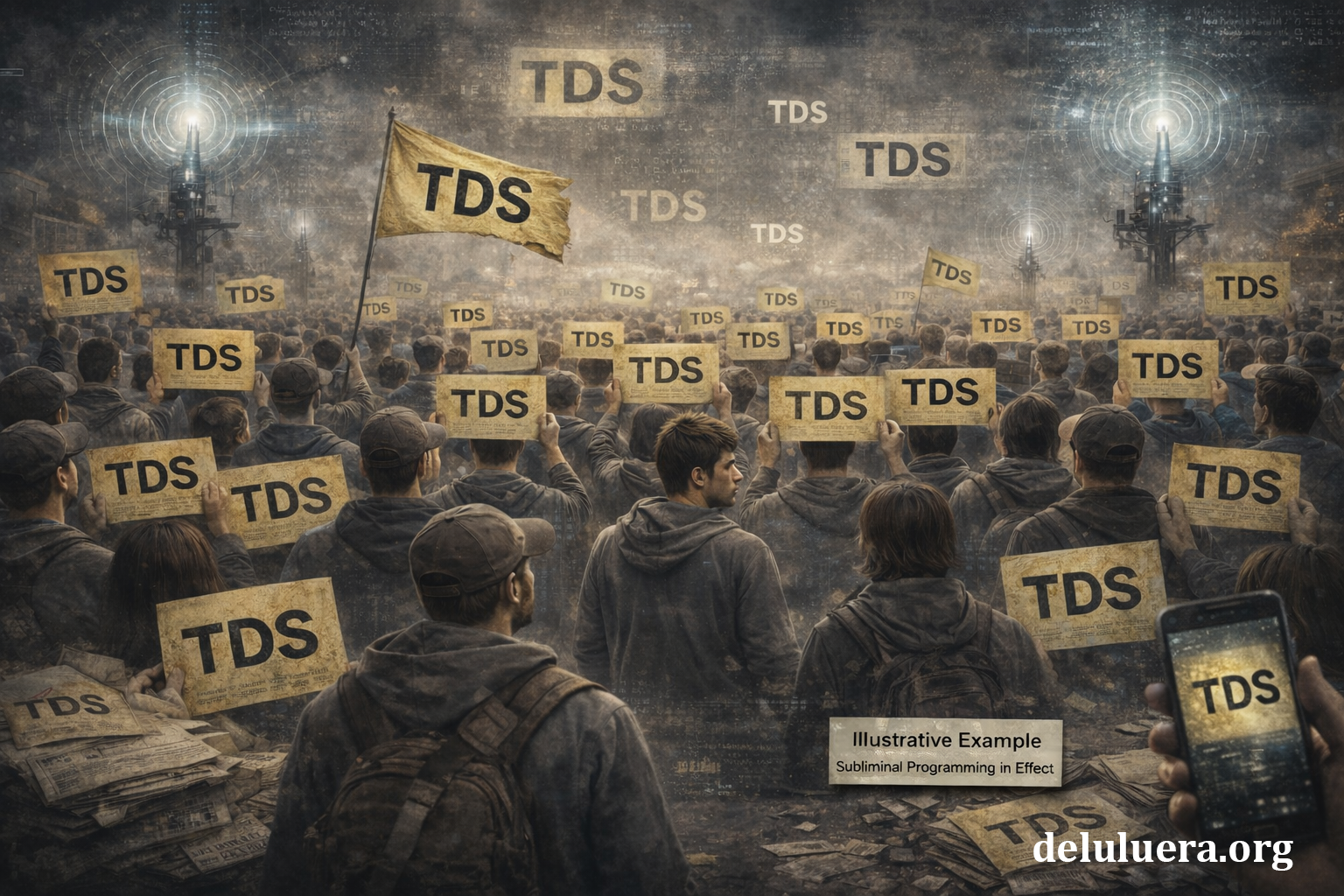
Illustrative depiction of conditioning through repetition and labeling.
Chapter 24: The Code of Refusal
This book has mapped the playbook of control, but it would not be complete if it stopped there. To write only of corruption and collapse without offering even a whisper of resistance would be surrender.
I cannot pretend to have solutions for the world, but I can tell you what I do in my own life.
Perhaps it may help you decide what you can do in yours. After all, if you have made it this far through the book, there is a good chance you have already noticed some of the same problems that I have.
Resistance does not always roar. Sometimes it is quiet. Sometimes it is inconvenient. Sometimes it is invisible to those who pass by. Nevertheless, it is there and it matters.
Throughout this chapter, you will find a few examples of how I go through life and how I try to do my small part rather than simply publicly complain about the problems I see and then willingly participate in the very things....

Canadians citizens positioned as assets within a controlled financial system.